Are you curious to learn some weird and wonderful facts about platypus?
If so, excellent! You are in exactly the right place my friend…
It’s time to chat about platypus facts.
Let’s dive right in…
Facts About Platypus
1 – Platypuses are mammals, however they are one of the five mammals that lay eggs rather than giving birth to live young. Female platypuses produce milk for their babies, just like other mammals do (the other egg-laying mammals are four species of echidnas).
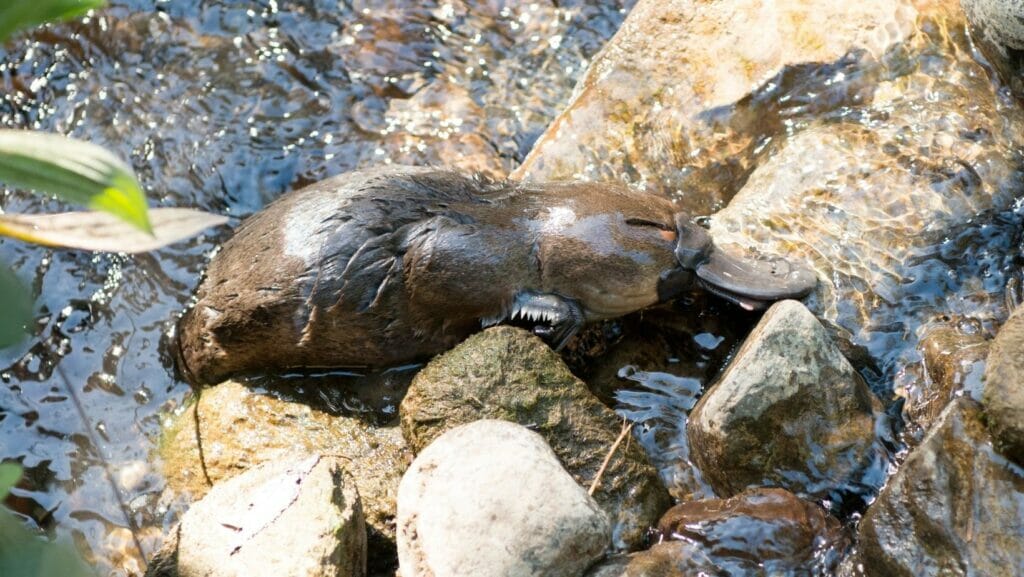
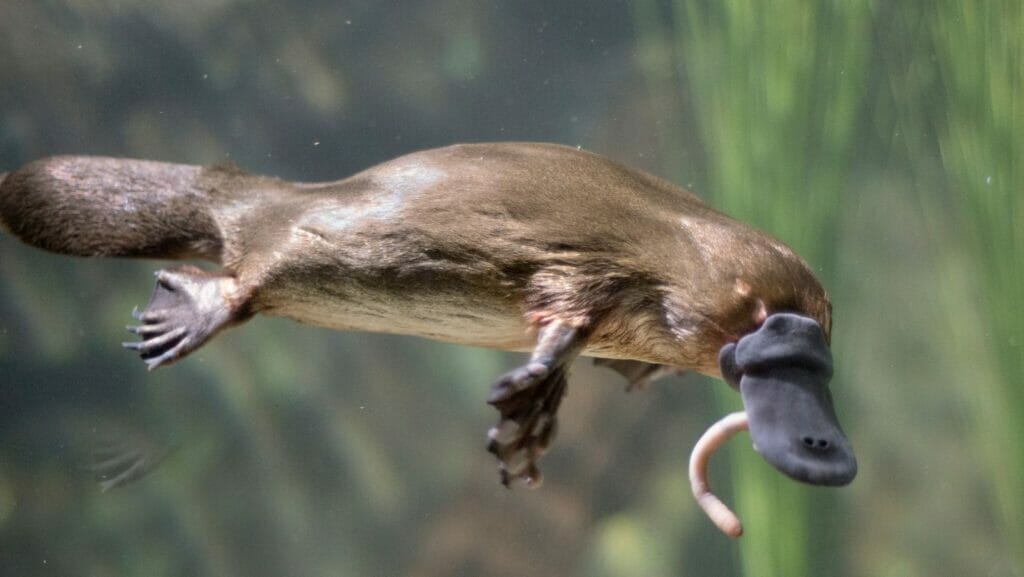
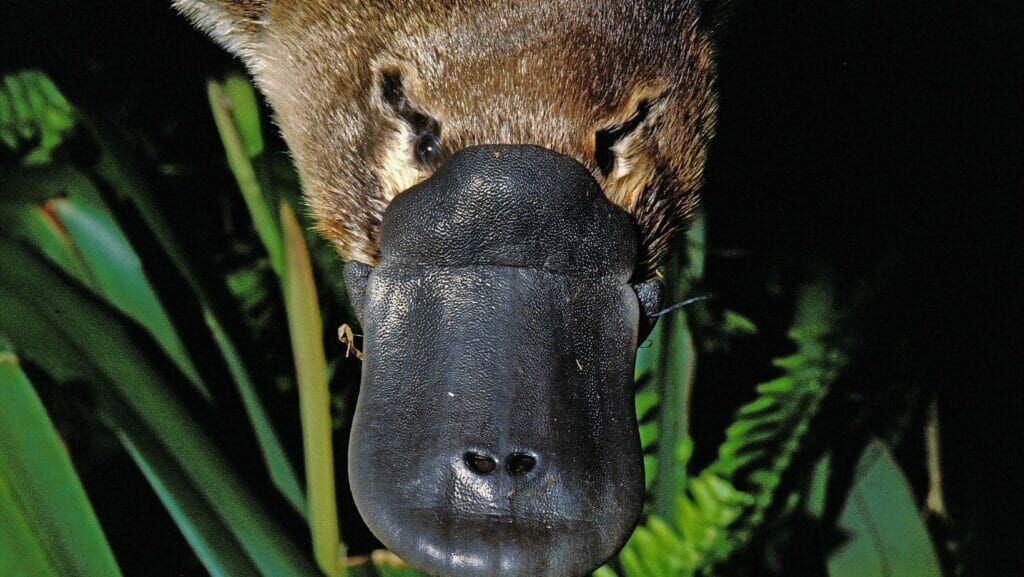
2 – Platypuses have a duck-like bill and webbed feet.
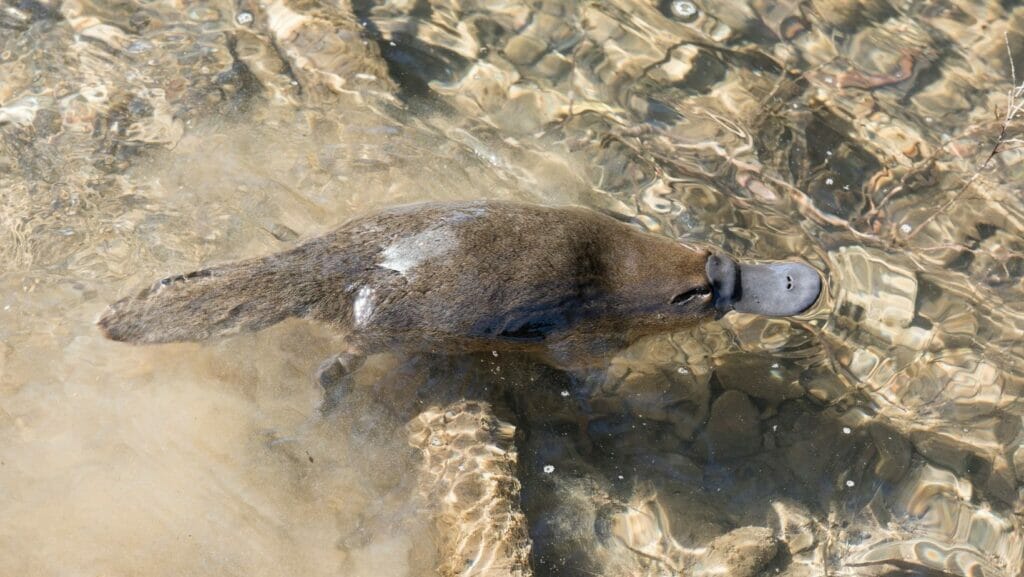
3 – The platypus can use its tail as a third leg when swimming or resting on the water’s surface.
4 – Male platypuses have poisonous spurs on their hind legs.
5 – A platypus can eat up to ten thousand worms in one day.
More Facts About Platypus
6 – They are usually about 3 feet long from nose to tail-tip and weigh between 5-8 pounds.
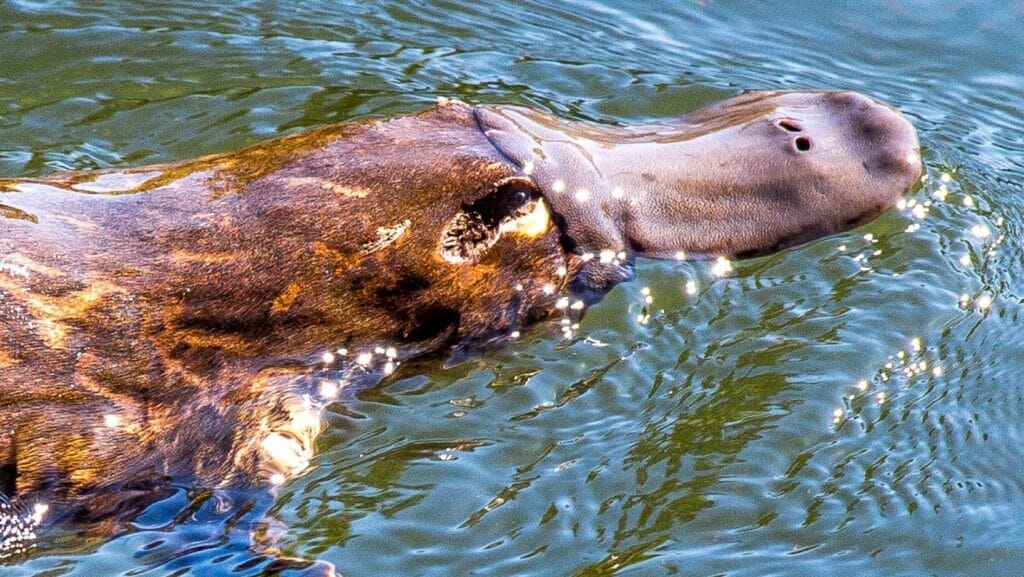
7 – They use electrolocation to find prey in murky water.
8 – Platypuses are one of two living species of monotremes and they can’t be found anywhere else in the world but Australia. Monotremes are mammals who lay eggs and produce milk to feed their young.
9 – The platypus has an average body temperature of about 32 degrees Celsius or 90 degrees Fahrenheit, which is lower than most other mammals, including humans!
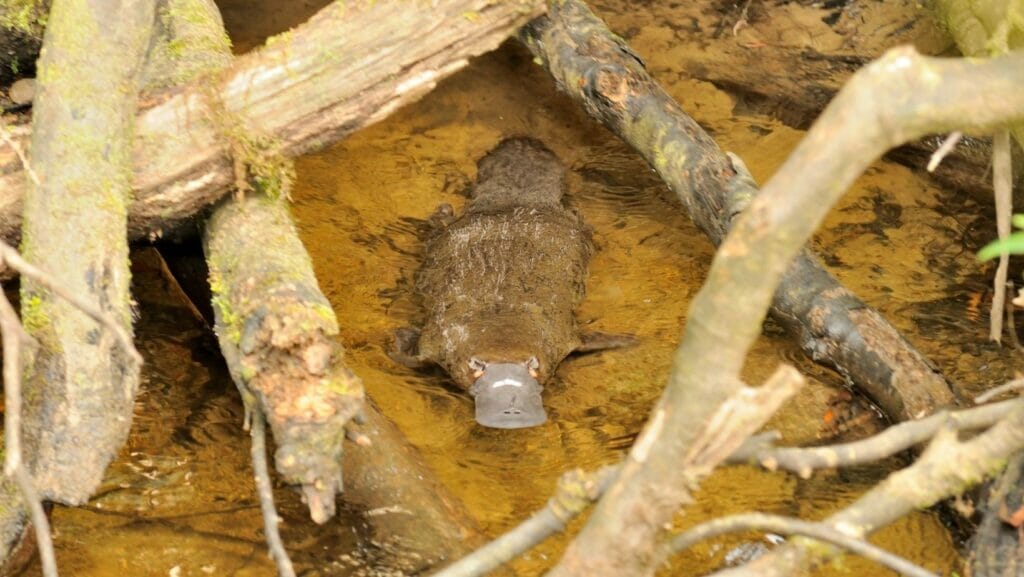
10 – Platypuses have been found living in burrows dug by water rats or wombats.
More Facts About Platypus
11 – A group of platypuses is called a “platy-family” or sometimes just “a puddle.”
12 – Male and female platypuses are born with teeth, but they lose them as they mature.
13 – Male platypuses are larger than females because they need to be able to compete with other males for access to females during mating season.
14 – The female platypus will typically lay two eggs at a time and incubate them for about 10 days before hatching occurs.
15 – Platypuses are nocturnal and spend most of the day in burrows or under water to avoid predators.
More Facts About Platypus
16 – Platypuses have a broad, flat tail that is shaped like a paddle.
17 – The platypus has four webbed toes on each foot.
18 – The platypus has no teeth but instead grinds up its prey with horny pads on its tongue called “marsupial molars.”
19 – Male platypuses can produce toxic venom from glands near the ankle, similar to some snakes and spiders which inject venom through fangs; however, this venom is produced continuously rather than being injected just before biting like most animals do.
20 – They lay eggs in the water which then hatch out of their mother’s cloaca (the opening to the reproductive system).
More Facts About Platypus
21 – A baby’s fur is black until it reaches about six months old when it turns brownish gray.
22 – Their hind legs are webbed and their tail is flat and broad to aid in swimming.
23 – The platypus is a semi-aquatic mammal that lives in eastern Australia, Tasmania, and New Guinea.
24 – Platypuses are mostly nocturnal animals who rely on their sense of hearing to hunt prey.
25 – The platypus has a beaver-like tail, webbed feet for swimming, and otter like fur.
BONUS FACTS
They use an electrosensory system called electroreception which allows them to detect electrical signals produced by the muscles of other animals or humans.
A mother’s milk provides nutrients for her young while also providing protection from disease due to antibodies against pathogens present in the environment such as bacteria and fungi.