• Skip to primary navigation
  • Skip to main content
  • Skip to primary sidebar
  • Skip to footer
  • Home
  • Our Story
  • Animals
  • World
  • History
  • People
  • Random
  • Im So Clever
Clever facts for clever people

Im So Clever

Clever Facts For Clever People

Facts About Earthquakes – 25 Fun Earthquakes Facts To WOW You!

September 13, 2021 by Im So Clever

Facts About earthquakes


Are you curious to learn some weird and wonderful facts about earthquakes?

If so, excellent! You are in exactly the right place my friend…

It’s time to chat about earthquake facts.

Let’s dive right in…


Facts about Earthquakes


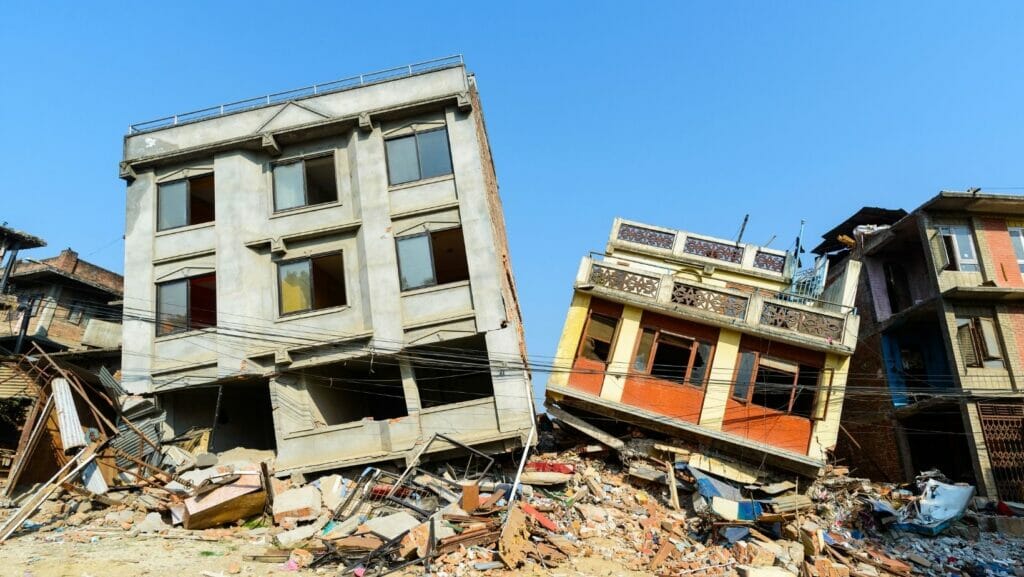
1 – An earthquake is a natural disaster that can cause damage to buildings and other structures.

2 – When an earthquake happens, it releases energy in waves, similar to how waves travel through water when something hits it.

3 – There are many different types of earthquakes, and they can differ in intensity.

4 – Most earthquakes occur at the boundaries of tectonic plates and have a magnitude less than 4 on the Richter scale.

5 – Earthquakes happen all over the world but most often in places where there is lots of geological activity. People who live near fault lines should know what to do if an earthquake occurs.

Facts About earthquakes

More Facts about Earthquakes


6 – Earthquakes can cause tsunamis, which can be disastrous for coastal areas.

7 – One of the most powerful earthquakes in recorded history was the Great Lisbon Earthquake of 1755, which had a magnitude of 8.5 on the Richter scale.

The top seven earthquakes are: Valdivia Earthquake (1960 – 9.5 Ritcher scale), Great Alaskan Earthquake (1964, 9.2), Sumatra Earthquake (2004, 9.1), Tohoku Earthquake (2011, 9.1), Kamchatka, Russian Earthquake (1952, 9.0), Maule, Chile Earthquake (2010, 8.8), Ecuador-Colombia Earthquake (1906, 8.8).

8 – Southern California has more earthquakes than any other part of the United States because that area sits on top of two tectonic plates (the Pacific plate and North American plate).

Scientists have some ideas about what might cause them – including friction between different types of rocks rubbing together deep below ground, or changes in pressure as water flows through subterranean channels beneath the earth’s surface.

9 – The United States Geological Survey (USGS) monitors earthquakes.

10 – Earthquakes are not usually dangerous unless you’re near the epicenter or there is a tsunami warning.


Facts About earthquakes


More Facts about Earthquakes


11 – Most earthquakes last less than one minute and have a magnitude of 4 or below.

12 – Scientists use seismographs to measure the strength and location of earthquakes.

13 – There are four different types of earthquakes – strike-slip, compressional, extensional, and thrust faults.

14 – A magnitude 5 earthquake can be felt up to 100 miles away from its epicenter.

15 – One plate will usually slide under the other one at an angle.


Facts About earthquakes

More Facts About Earthquakes


16 – Earthquakes happen because of the movement or shifting of tectonic plates. The magnitude is measured on a scale from 1-10, with 10 being the most powerful.

17 – An earthquake can last anywhere from a few seconds to several minutes. There are two main types – shallow and deep (a third is an intermediate earthquake).

18 – Shallow earthquakes tend to be less dangerous than deep ones because they don’t have as much energy. Deep earthquakes release more energy and cause more damage because they’re closer to the earth’s core.

19 – Shallow earthquakes can be felt by humans because they focus on the Earth’s surface. Intermediate earthquakes may not always be noticeable to people but can still cause damage. Deep earthquakes occur at depths of 50 miles or more below the earth’s surface and often produce tsunamis when they strike land.

20 – In 1906, a massive quake hit San Francisco killing over 3,000 people and leveling most buildings in town.


Facts About earthquakes

More Facts About Earthquakes


21 – An earthquake’s magnitude is calculated from measurements made by seismometers, which record ground shaking.

The magnitude of an earthquake depends on three factors – the area it affects, its depth below the earth’s surface, and the type or structure that it moves through.

22 – If you’re in an earthquake-prone region then make sure to have emergency supplies ready like water, food, a flashlight with fresh batteries and other necessary items at home and in your car in case you need to evacuate quickly.

23 – The Earth’s crust is made up of about 12 major plates and many smaller ones.

24 – Earthquakes can be caused by volcanic eruptions, landslides, and nuclear explosions.

25 – The San Andreas Fault in California has been linked to many earthquakes since 1906.

26 – An earthquake with magnitude 5 or above could cause serious damage to buildings and other structures.

Most people have misconceptions about how much shaking they will experience during an earthquake – most people feel like they’re being shaken up and down while others feel as if their whole house is moving side-to-side.

There were over 20,000 earthquakes worldwide according to USGS (US Geological Survey) data (approximately 55 per day).

A tsunami can be created if there is an undersea quake near or below sea level that displaces water above it.


If you enjoyed this post, please feel free to share it!

Filed Under: History

Reader Interactions

Primary Sidebar

Categories

  • Animals
  • History
  • People
  • Random
  • World
  • Facts About Zombies – 25 Fun Zombies Facts To WOW You!
  • Facts About Your Body – 25 Fun Your Body Facts To WOW You!
  • Facts About Winter – 25 Fun Winter Facts To WOW You!
  • Facts About Werewolves – 25 Fun Werewolves Facts To WOW You!

Footer

  • Privacy Policy

Copyright © 2026 · Splendor Theme on Genesis Framework · WordPress · Log in