Are you curious to learn some weird and wonderful facts about Great Barrier Reef?
If so, excellent! You are in exactly the right place my friend…
It’s time to chat about Great Barrier Reef facts.
Let’s dive right in…
Facts About Great Barrier Reef
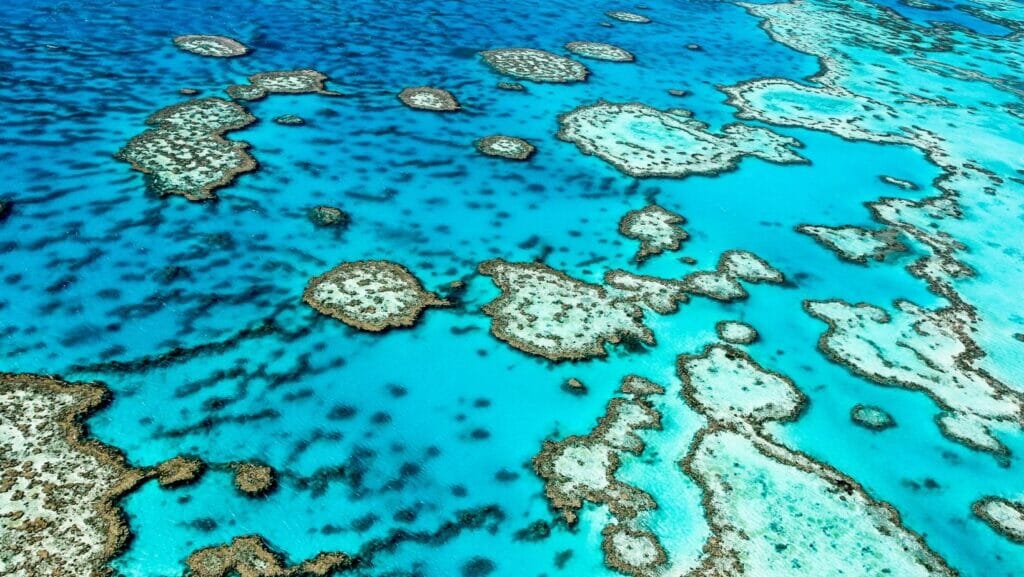
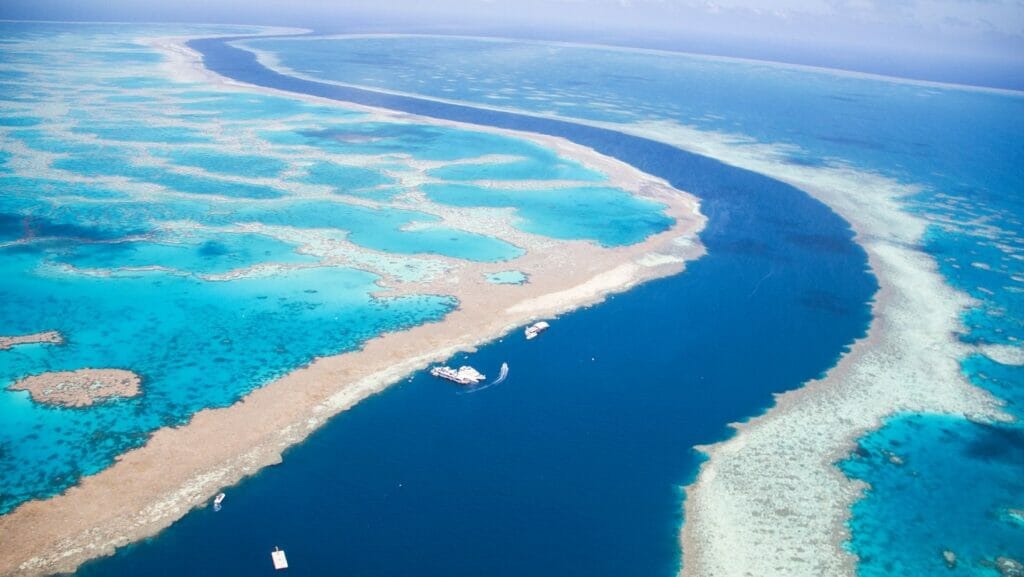
1 – The great barrier reef is the world’s largest living structure. It can be seen from outer space.
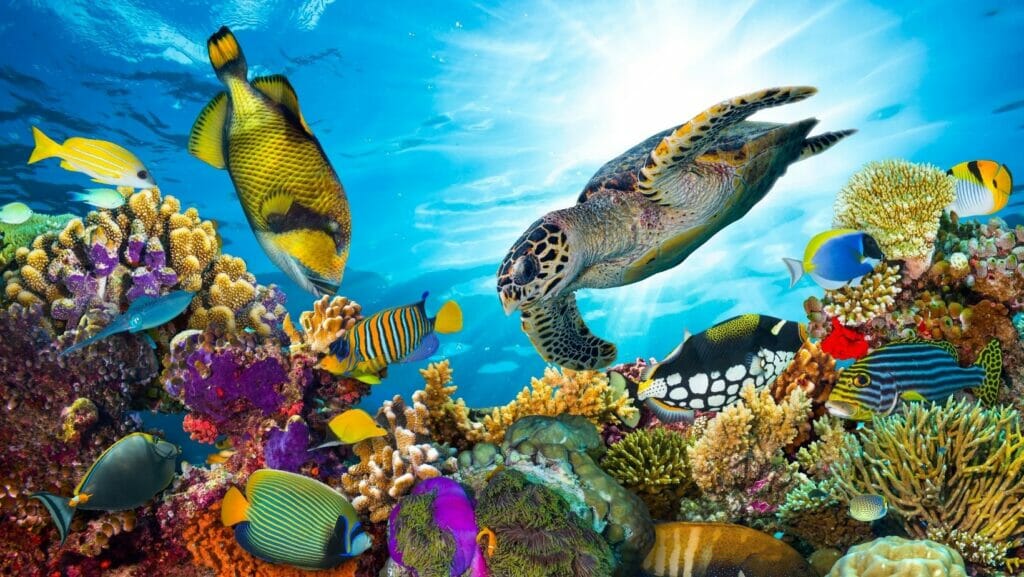
2 – The Great Barrier Reef is home to more than 1,500 species of fish and over 200 types of coral.
3 – There are around 400 islands on the reef, some as big as small towns.
4 – The Great Barrier Reef supports an important ecosystem that provides food for many people in Australia and other countries near by.
5 – Coral reefs like the Great Barrier Reef provide a natural breakwater which protects coastal communities from storms and tsunamis.
More Facts About Great Barrier Reef
6 – It’s located off the coast of Queensland, Australia and stretches over 2,300 km and covers an area of 348 000 sq kilometers.
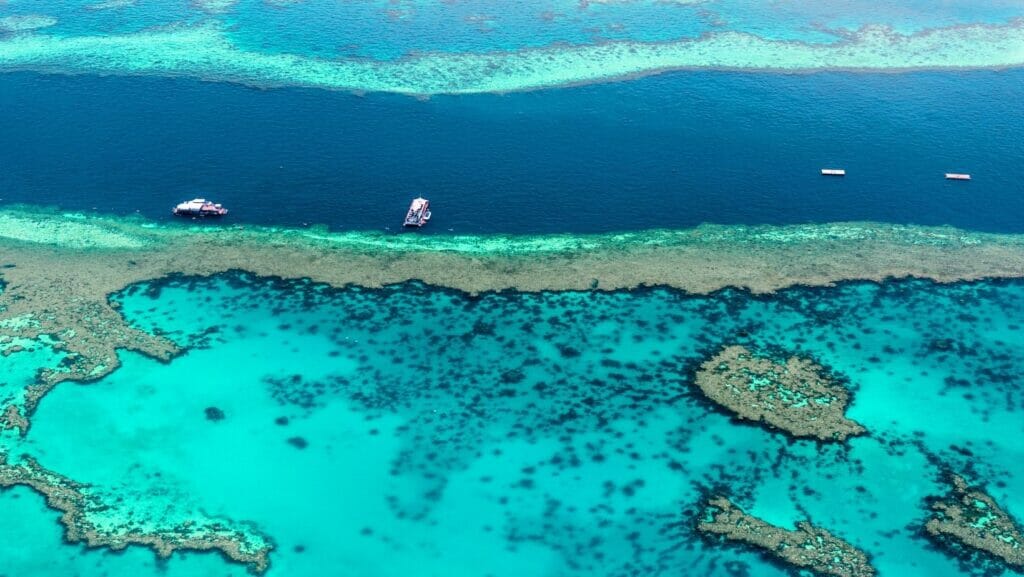
7 – There are 3 main sections – The Ribbon Reefs, Northern Reef Complex and Southern Reef Complex.
8 – Tourism generates $6 billion annually for Australian economy.
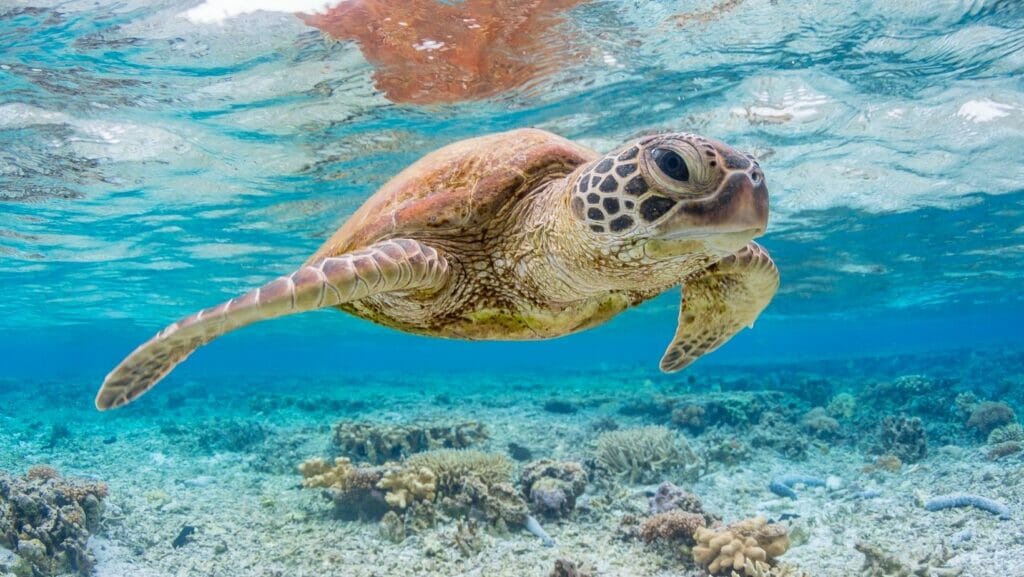
9 – It’s home to a huge variety of marine life including turtles, dolphins and whales.
10 – A single cubic meter can contain up to 50 million individual animals and plants.
More Facts About Great Barrier Reef
11 – The Great Barrier Reef is home to a wide variety of marine life including turtles, dolphins, whales, sharks, clownfish, sea snakes (sea kraits) and many others.
12 – Coral is an animal that looks like a plant but it’s actually alive.
13 – Coral provides food for many types of fish and other marine life. Coral reefs are home to many plants and animals that cannot live in any other environment.
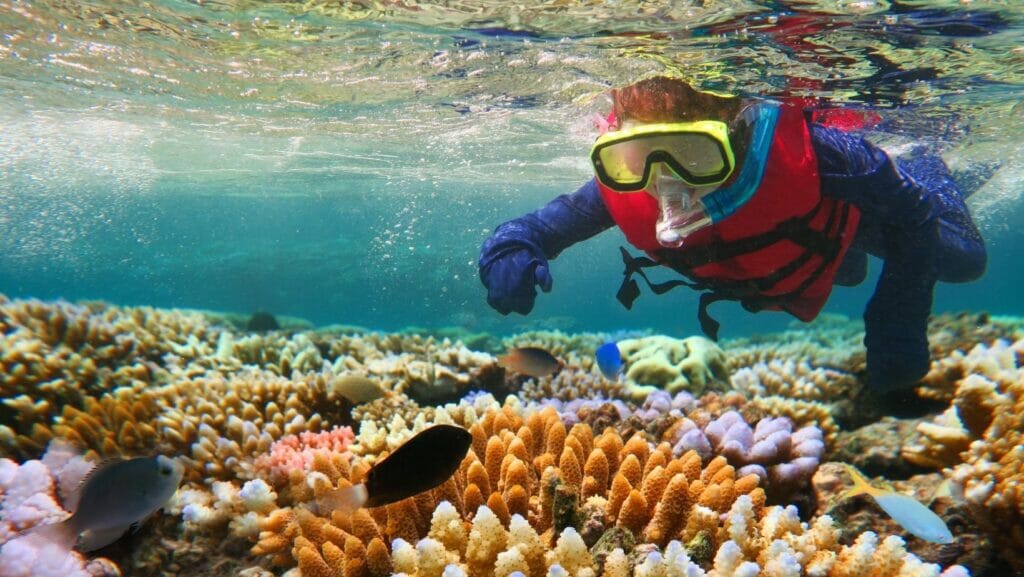
14 – When humans touch or step on coral they can kill it by breaking off pieces.
15 – The reef was listed as a World Heritage Site in 1981 because of its importance to biodiversity and marine life. The reef was inscribed as a World Heritage site in 1981 by UNESCO to protect its biodiversity from human-induced threats such as climate change or pollution.
More Facts About Great Barrier Reef
16 – It generates income through tourism (coral tours), fishing and scientific research.
17 – It provides food for about 70% of the animal population in the ocean.
18 – Coral bleaching occurs when water temperatures rise too high and disrupts the symbiotic relationship between algae and corals. This causes a loss in colour and leads to death if not stopped soon enough.
19 – The average depth at low tide is around 5 meters or 16 feet below sea level.
20 – Almost 3 million people visit the reef each year for recreational purposes or to conduct research on marine life in an effort to protect it from further damage by humans.
More Facts About Great Barrier Reef
21 – People who study marine life are working to understand how climate change affects the health of this sensitive ecosystem. As we learn more about what makes up this beautiful place in the ocean, we will be able to better protect it for future generations.
22 – Although coral reefs have actually been around for over 500 million years, the Great Barrier Reef is still pretty young at 500,000 years. This most modern form that you see today is only 8,000 years old andwas developed after the last ice age.
23 – Coral reefs protect shorelines from erosion by absorbing wave energy.
24 – More than 30 kinds of whales and dolphins use it as a breeding ground. It covers an area larger than Japan or California and has more than 400 islands within its boundaries.
25 – Climate change has been one of the major threats to the ecosystem – warming seas cause more frequent bleaching events which kill off parts or all of some coral colonies. As well as climate change, pollution from agricultural runoff is also damaging the reef.
Bonus Facts
Over 100 species of jellyfish live in the water surrounding it.