
Are you curious to learn some weird and wonderful facts about Louis Pasteur?
If so, excellent! You are in exactly the right place my friend…
It’s time to chat about Louis Pasteur facts.
Let’s dive right in…
Facts about Louis Pasteur
1 – Louis Pasteur was a French chemist and biologist.
2 – He is most famous for his discovery of the causes and prevention of diseases, including pasteurization.
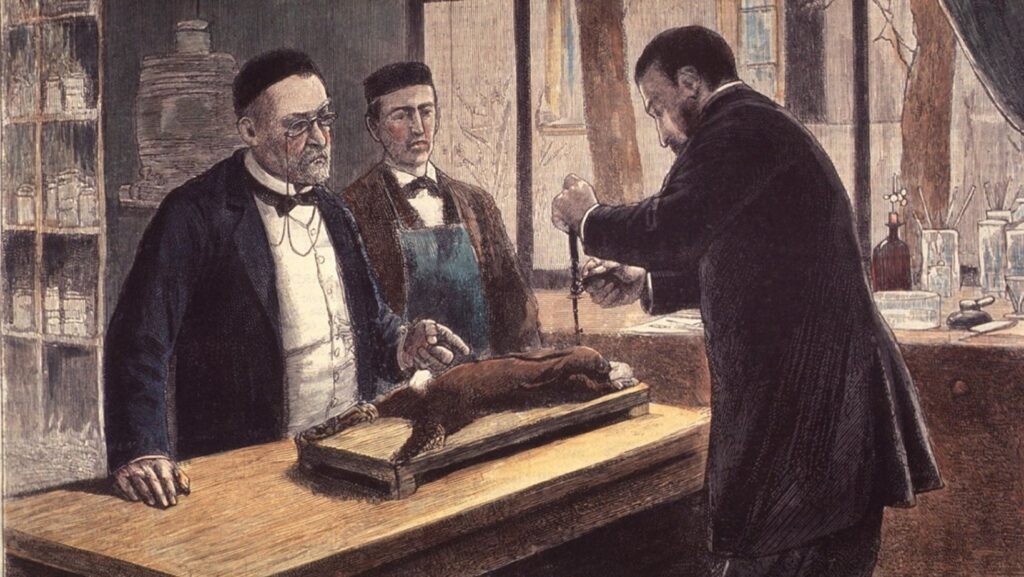
3 – He was also an inventor, who patented more than 50 inventions. His discoveries reduced mortality from puerperal fever, and he created the first vaccines for rabies and anthrax.
4 – He became professor at the University of Strasbourg in 1854.
5 – In 1862 he founded what would become the Pasteur Institute in Paris to study infectious diseases; it is now one of France’s leading biomedical research centers.
More Facts about Louis Pasteur
6 – Louis Pasteur was born on December 27, 1822 in Dole, France.
7 – His first scientific paper was published when he was only 17 years old.
8 – On July 14, 1895 he died after suffering from a stroke while at home with his family in Paris.
9 – He had 5 children with his wife Marie-Louise Valet (1837-1911).
10 – In 1888 he became the first person to be awarded two Nobel Prizes – one in chemistry and one in physiology or medicine.
More Facts about Louis Pasteur
11 – His research on spoilage led to methods for preventing food from spoiling by heating it to temperatures that would kill any bacteria present or adding chemicals like sulfur dioxide.
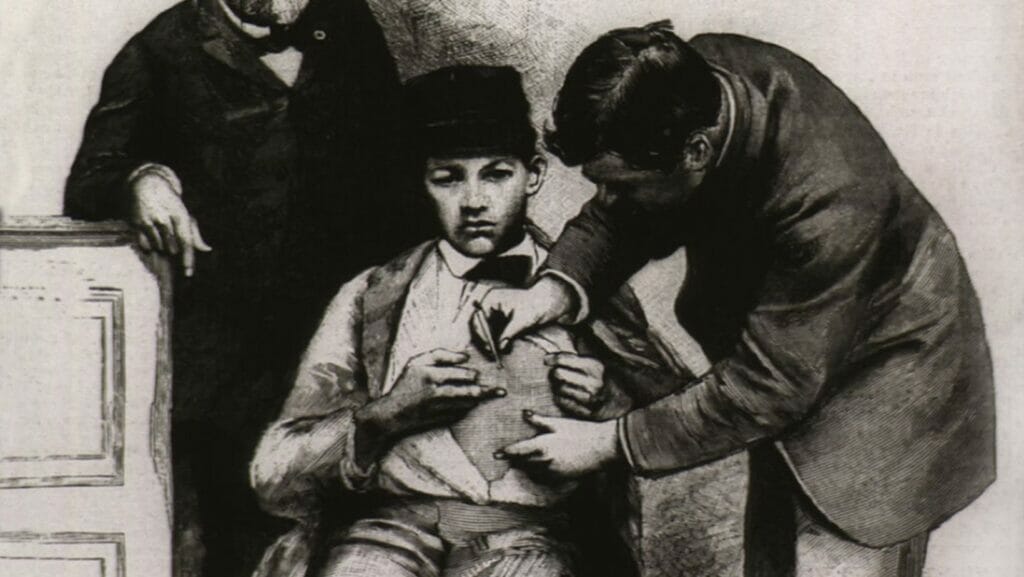
12 – In 1857 he created The World’s first rabies vaccine in response to an epidemic that killed thousands of people across Europe.
13 – Today we know him as “The Father Of Microbiology” due to his groundbreaking work with microscopic organisms (bacteria) which helped us understand how diseases are spread.
14 – In 1854 he discovered that bacteria are what cause milk to spoil, which led him to create the process of pasteurization.
He also developed one of the first methods to treat milk so that it could be used safely without refrigeration.
15 – He also developed one of the first methods for producing large quantities of penicillin.
More Facts About Louis Pasteur
16 – His research on fermentation revealed that yeast cells convert sugar into alcohol and carbon dioxide gas (carbonation) under anaerobic conditions.
17 – One year after publishing “Etudes sur le vin” (“Studies on Wine”) he became interested in alcoholic beverages as a result of work with Champagne producers.
18 – His discoveries reduced mortality rates from puerperal fever, which is now called “childbed fever” because it often happened after childbirth.
19 – In 1864 he was appointed professor at the École Normale Supérieure in Paris (a position he held until his death).
20 – He served as dean of the Faculty of Sciences from 1867 to 1888 and again from 1893 to 1895; in this capacity he inaugurated the new chemistry laboratory in 1887.
More Facts About Louis Pasteur
21 – He founded the science of molecular biology with his work on fermentation when he showed that not all microbes are harmful (as was previously thought) but some can help create food like cheese or alcohol as well as make yogurt and sour milk safe to drink by killing dangerous bacteria present in them.
22 – There are two towns named after him – one in Quebec Canada where he completed much of his early research at Laval University; another one near Paris where he lived from 1878 until his death in 1895.
23 – He attended the lycee at Dijon where he excelled in science and mathematics. In 1854 he became Professor of Chemistry at Lille.
24 – In 1849 he received his degree from the University of Strasbourg with a thesis on crystallography.
25 – His family’s house still stands today and is open to the public for tours.
His discoveries helped improve public health in Europe and around the world.
He was also an avid inventor, creating over 50 patents throughout his lifetime.
The products that he invented included silkworm eggs which allowed silk production to become more sustainable.
He died on September 28th 1895 at age 73 from pneumonia after being exposed to germs during an operation to remove his bladder stone.
There are many statues around France honoring his work including one at the Institut Pasteur named “The Thinker” which shows him sitting with a microscope over one shoulder.
Some say that Louis Pasteur’s greatest contribution was not just discovering cures for deadly diseases but also educating people about how they could prevent them through hygiene practices.