

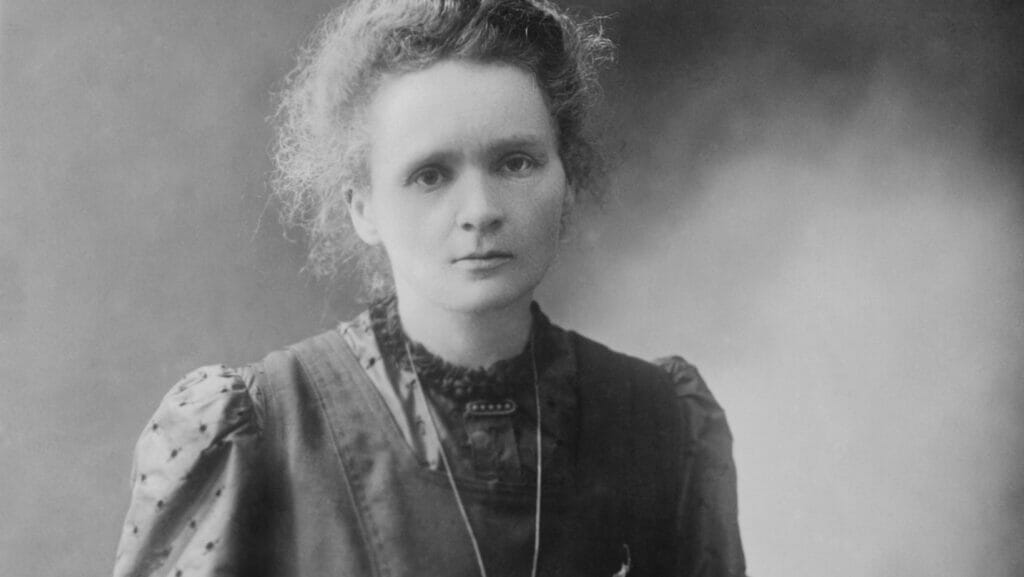
Are you curious to learn some weird and wonderful facts about Marie Curie?
If so, excellent! You are in exactly the right place my friend…
It’s time to chat about Marie Curie facts.
Let’s dive right in…
Facts about Marie Curie
1 – Marie Curie was born in Warsaw, Poland in 1867.
2 – She attended a girls’ school and studied at the Sorbonne and later became one of the first female professors at the University of Paris.
3 – In 1911 she became the first woman to win a Nobel Prize for her research into radioactivity.
4 – She is the only person to have been awarded two Nobel Prizes. Her first Nobel Prize was for Physics and her second for Chemistry.
5 – Marie Curie died of leukemia caused by exposure to radiation from her laboratory work.

More Facts about Marie Curie
6 – The radioactivity unit is named after her and is abbreviated as “curie” (Ci).
7 – She met her future husband Pierre while working as his assistant.
8 – After Pierre died of cancer, Marie continued their work together with their second daughter Eve (born 1910) until both daughters were diagnosed with radiation sickness and had to be quarantined for years.
9 – In 1903 she won a Nobel Prize in Chemistry and shared it with her husband Pierre.
Her second Nobel Prize came in 1911 when she received the award for Physics because she discovered two new elements – polonium and radiu.
10 – After World War I, Marie Curie found out that France had given away rights to mine uranium without compensating them or even informing them about it so they moved to Sweden where they were better compensated by being provided with free laboratory space and all their research costs paid for by Sweden’s government.
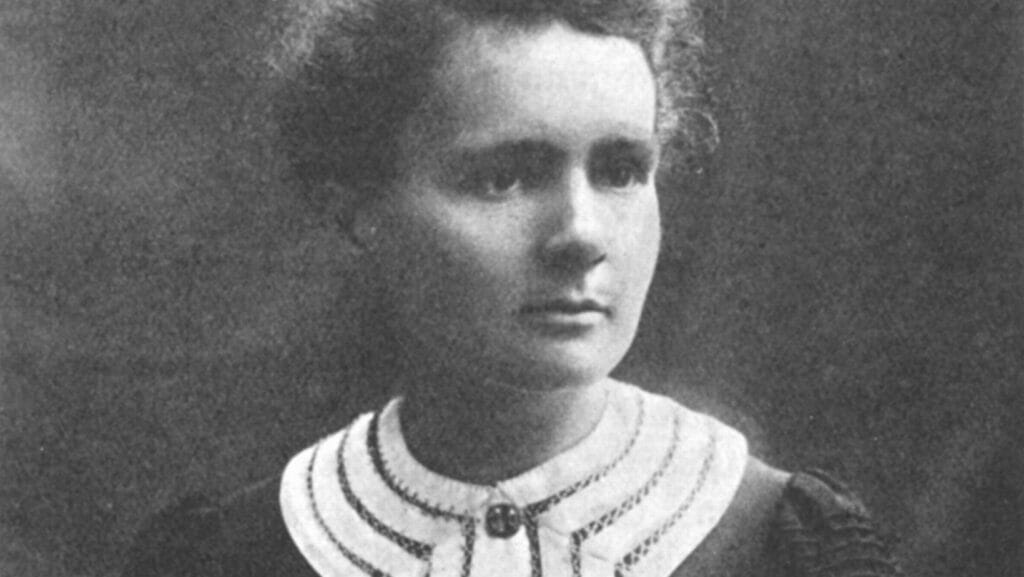
More Facts about Marie Curie
11 – She became a French citizen after World War I when she married Pierre Curie.
12 – In 1995, Madame Curie was inducted into the National Women’s Hall of Fame.
13 – She discovered two new elements, polonium and radium ; both are radioactive metals that emit alpha particles from their nuclei when they decay (the only other known natural element with this property is thorium).
Polonium was so named because Marie’s homeland of Poland had recently been made part of Russia at the time she discovered it while radium came from “radius” meaning “ray.”
Radon gas is also one product created by radium decay which can cause lung cancer if inhaled too often or over long periods of time.
14 – The French government gave her a state funeral honoring her achievements as an international scientist and pioneer in women’s education and rights.
15 – In 1995, she became the first female figure on French currency when France minted a 100 franc coin bearing her likeness.
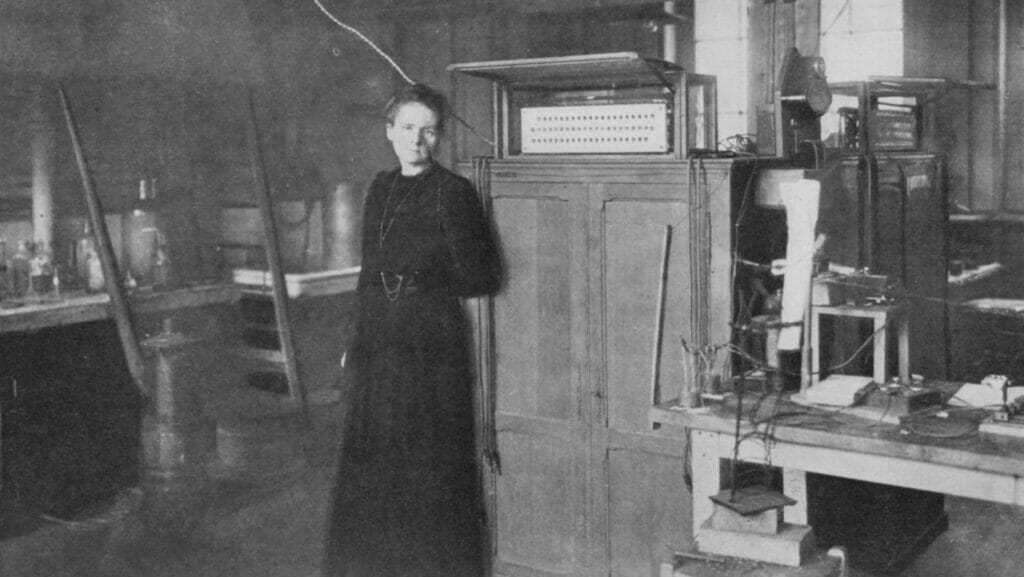
More Facts About Marie Curie
16 – When World War I broke out in 1914 she set up mobile radiography units near battlefields so that wounded soldiers could be examined without having to be carried back to medical tents which might have been too far away from where they were injured or killed.
17 – For this war effort she received several honors including being made an Officer of the Legion d’honneur by French President Raymond Poincaré.
18 – There is a crater on Venus named after her because it has high levels of radioactive uranium.
19 – She is one of only four female scientists to have won two Nobel Prizes (the other three are Ada Lovelace, Dorothy Hodgkin, and Margaret Mead).
20 – In 1903, she became the first woman to gain a doctorate from the Sorbonne, which had previously refused her admission due to her gender.
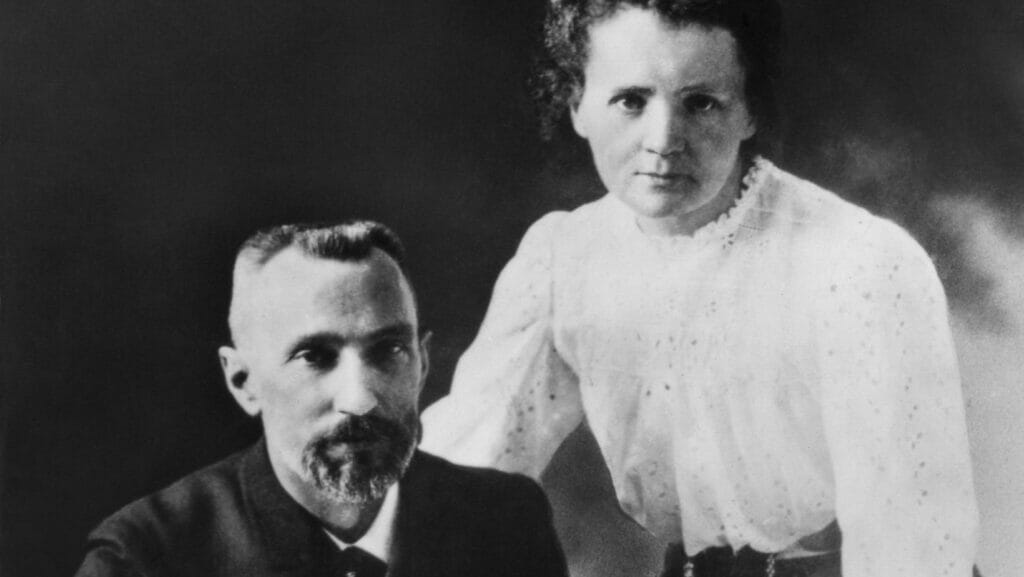
More Facts About Marie Curie
21 – When she died, she left behind two daughters who would also become scientists.
22 – Her discoveries led to the invention of x-rays for medical use which helped save many lives from cancer.
23 – In 1995 she was named as one of the 100 most important people in history by Time magazine.
24 – She received her PhD from Sorbonne University at age 25. Her doctoral thesis was titled “On Radioactive Substances.”
25 – When she died, her daughter Irene took over her research and became the second woman to win a Nobel Prize in science.
Her story shows that even if you’re not from a wealthy or famous family, you can still make an impact on society with your skills and intelligence.
