Are you curious to learn some weird and wonderful facts about Uluru?
If so, excellent! You are in exactly the right place my friend…
It’s time to chat about Uluru facts.
Let’s dive right in…
Facts About Uluru
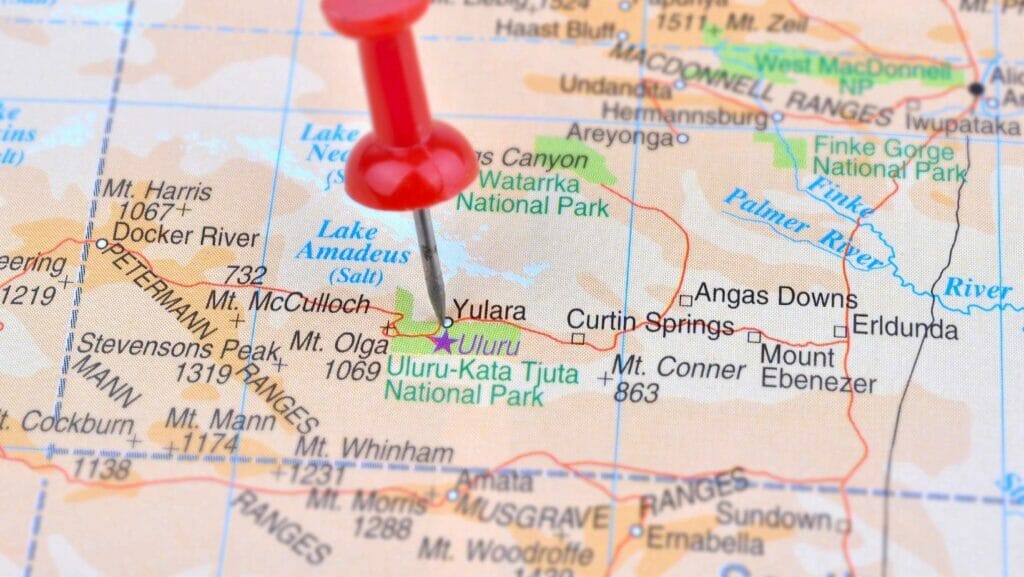
1 – Uluru is a large sandstone rock formation in the Australian Outback, more specifically the state of Northern Territory.
2 – The Aboriginal name for Ayers Rock (its original name) is Uluru and it is sacred to the Anangu people who live near its base.
3 – It was first sighted by Europeans in 1872 when explorer Ernest Giles mistook it for an island.
4 – In 1985, Uluru became a UNESCO World Heritage Site.
5 – It is one of Australia’s most famous natural landmarks and has been featured in many films, including “Mad Max Beyond Thunderdome.”
More Facts About Uluru
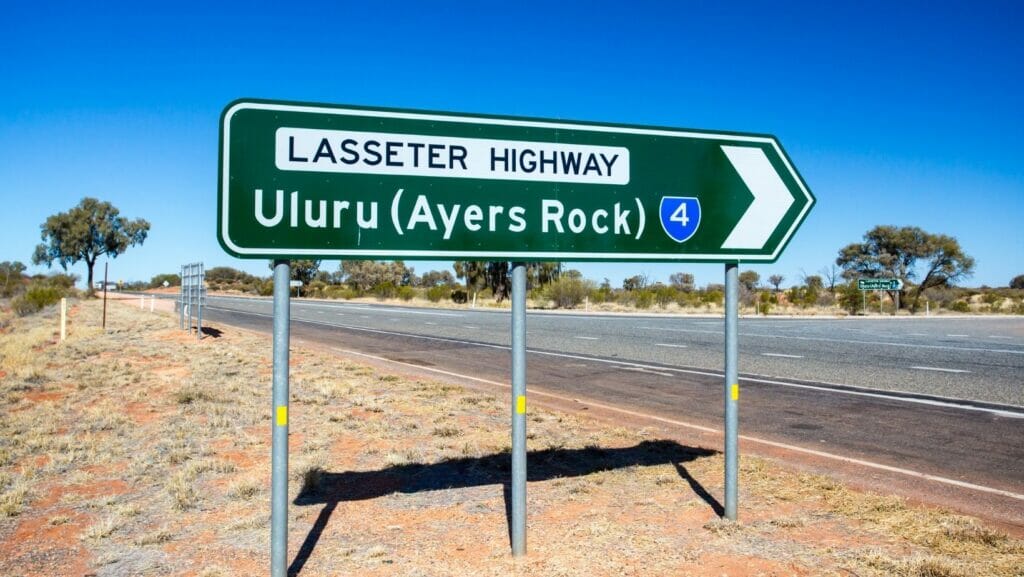
6 – It was originally called Ayers Rock after Sir Henry Ayers who was the Chief Secretary of South Australia but the name of the rock was officially renamed Uluru in 1993.
7 – Climbing to the top of Uluru isn’t allowed – but there are tours where people can walk around its base and learn more about what it means to Aboriginal people. Uluru is the ancestral home of the Anangu people.
8 – Uluru covers an area of 348 hectares and rises 863 meters above ground level. It’s about 3 kilometers in diameter. The rock has a circumference of 29 km.
9 – There are more than 350 Aboriginal paintings on the rock face.
10 – Uluru was formed when molten lava flowed over sandstone beds that were already tilted upwards.
More Facts About Uluru
11 – The top of the mountain is about 3 kilometers from its base at Kata Tjuta (The Olgas).
12 – In traditional Aboriginal culture, Uluru was not created by human beings but instead came into existence long before humans were born.
13 – The Anangu people have lived in and around Uluru for more than 25,000 years.
14 – Uluru is the world’s largest monolith. It was formed over 350 million years ago by sandstone and lava.
15 – Uluru is 3 times the size of the great pyramid of Giza.
More Facts About Uluru
16 – It was first climbed by Europeans in 1936 and more than 100 people have died trying to climb it since then.
17 – If you were to now climb to the top of Uluru, you would receive a $10,000 fine for disrespecting the new law.
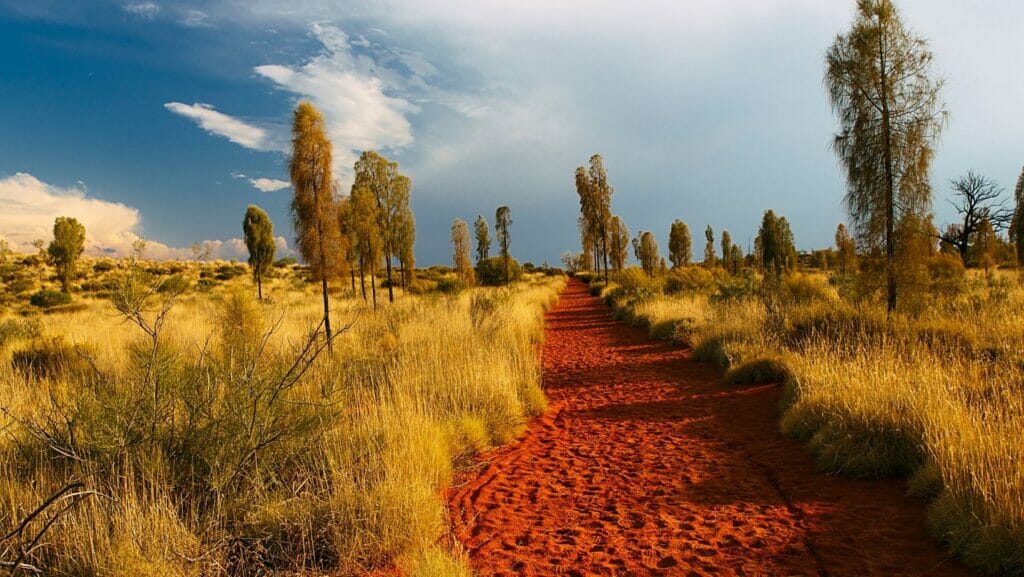
18 – There are more than 350 species of plants around Uluru, many of which can survive without much water or sunlight.
19 – The Anangu (local Aboriginal) people live on the land surrounding the rock, and they’re allowed to make decisions about how visitors behave when visiting the site.
20 – The Aboriginal people of Australia believe that Uluru was created by a great spirit, and it’s their most sacred site.

More Facts About Uluru
21 – It was formed by geological forces over millions of years. It’s located in the Northern Territory about 350 miles (560 km) southwest of Alice Springs.
22 – It’s part of the Uluru-Kata Tjuta National Park, which was established in 1958.
23 – In 1872, explorer William Gosse became the first European to see uluru and named it Ayers Rock after Sir Henry Ayers, then Prime Minister of South Australia.
24 – Uluru is an Aboriginal name meaning “red earth.” There are many different types of rocks found on uluru including sedimentary, igneous, and metamorphic rocks. It was formed by continuous erosion over millions of years.
25 – There are three main sites at Uluru – Kaltukatjara, Mutitjulu, and Talinga – each with their own significance to the people who live there. Kaltukatjara is home to many sacred sites such as waterholes, caves, and areas where ceremonies take place; it also has a community store that sells food items made by local women.
In 2005, UNESCO added Uluru-Kata Tjuta National Park to their World Heritage list because they believe it’s important to protect these sites for future generations and also because they’re such an important part of local culture.
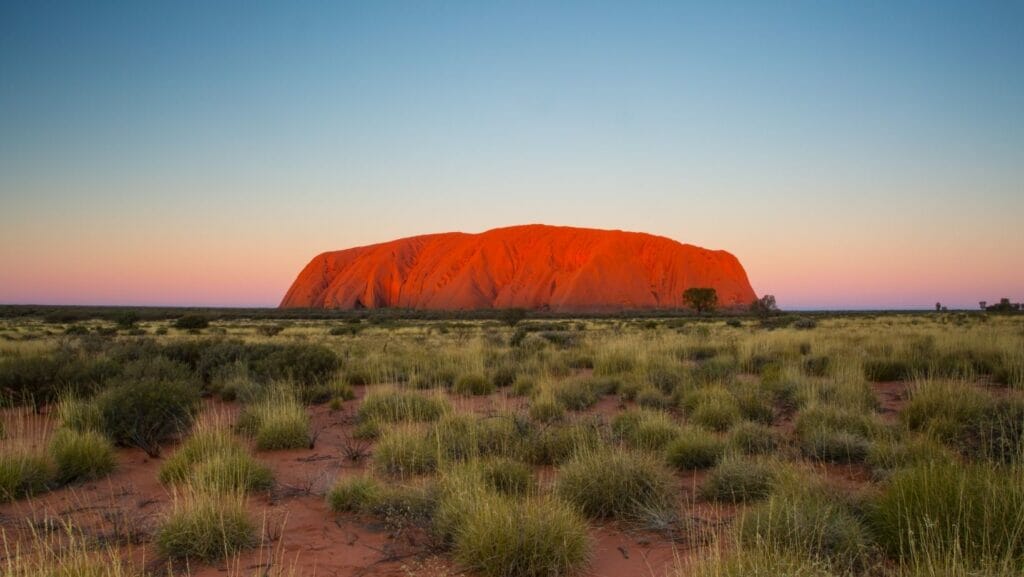
The rock has a pinkish hue because of the oxidized iron in it.
There are many different meanings to the word Uluru – “Tjukurpa” or “Dreaming Place” in Pitjantjatjara; and “The Red Centre” in English.